November 11, 2025
When your website spans hundreds, or even thousands, of pages, maintaining consistency becomes a serious challenge. Fonts drift, layouts vary, and user experiences begin to differ depending on which section of the site you land on. For large organizations, these inconsistencies don’t just affect design—they dilute brand trust and make long-term maintenance a nightmare.
At FYIN, we build digital ecosystems that scale gracefully. Here’s how to keep enterprise websites cohesive, no matter how big they grow.
Why Large Websites Struggle with Consistency
The Challenge of Multiple Stakeholders and Content Owners
In enterprise environments, websites are rarely managed by a single team. Marketing handles campaigns, HR posts careers, IT manages security updates, and individual departments might own entire site sections. Without a unified system, each page starts to take on its own “accent,” slowly eroding design consistency.
Brand Drift and UX Fragmentation Across Pages
Brand drift is what happens when a site’s design language starts to fragment. Different teams use slightly different button styles, spacing, or tones of voice. Over time, this creates a disjointed user experience and weakens the visual identity your brand worked so hard to build.
How Design Debt Builds Over Time
Every time a new element or template is added without proper documentation, design debt increases. Eventually, maintaining the website feels like managing a collection of exceptions instead of a unified system.
The Foundation of Scalable Design
As websites grow, maintaining a unified look and feel becomes increasingly complex. What begins as a handful of well-designed pages can quickly expand into dozens of layouts and components, each slightly different from the last. A scalable foundation keeps design consistent and collaboration efficient—ensuring every new addition feels like part of the same brand story.
Establishing a Design System (and Why It Matters)
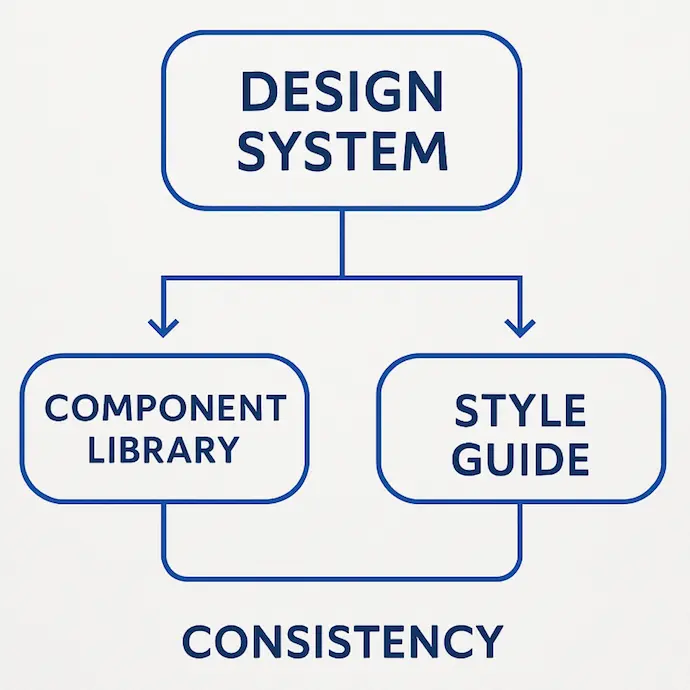
A design system isn’t just a style guide—it’s a living library of reusable patterns and components. It ensures that as your website grows, every page looks and feels consistent. By standardizing visual elements, your design and development teams can move faster and stay aligned.
Explore how FYIN’s UX and web design services integrate scalable design systems that keep large sites unified.
Component Libraries: Your Secret to Consistency
Component libraries take your design system a step further by turning design rules into coded elements. Buttons, forms, and layouts can be reused anywhere without breaking consistency. When built on solid frameworks like .NET or React, these components are flexible, fast, and future-proof.
Using a Style Guide as a Single Source of Truth
Every organization should have a centralized, accessible style guide that outlines color usage, typography, iconography, and tone of voice. This document becomes the cornerstone for design governance, making onboarding and collaboration seamless.
Governance and Workflow: Keeping Teams Aligned
Setting Clear Ownership for Content and Design
Consistency starts with accountability. Define who owns the brand’s visual standards, who approves changes, and how updates flow through the organization. Establishing ownership prevents departments from drifting off course with ad hoc edits.
Review and Approval Workflows that Prevent Drift
A clear review and approval process ensures updates go through design and content oversight before publication. Modern CMS platforms can automate these workflows, flagging inconsistencies early. FYIN’s custom development services often include workflow automation to keep large web teams efficient and aligned.
Leveraging Version Control and CMS Permissions
Version control systems like Git—or role-based CMS permissions—can maintain design integrity by restricting access to sensitive elements. This helps large organizations balance collaboration with control.
UX Consistency Across Multiple User Journeys
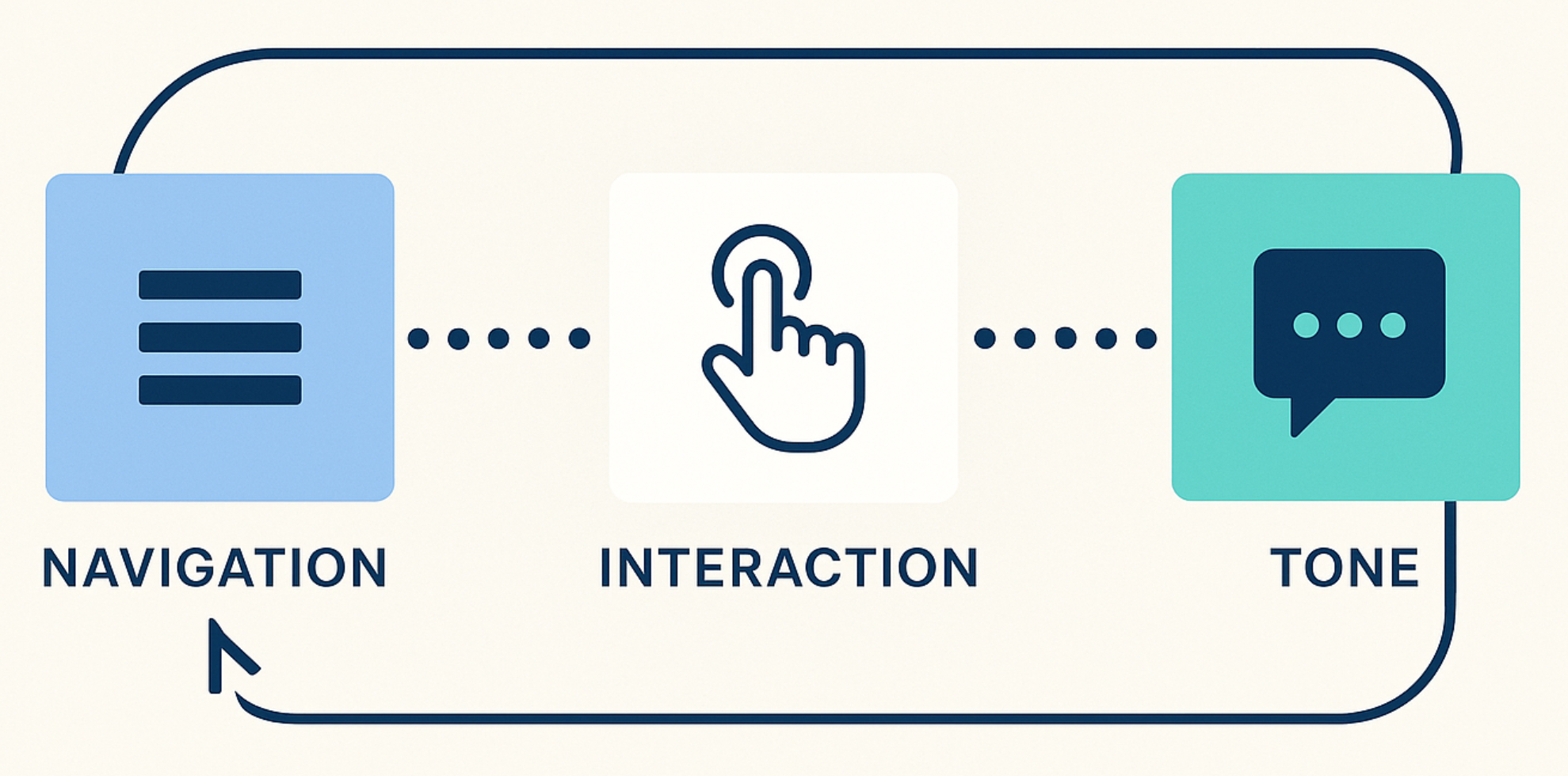
For large websites, user experience can easily fragment as visitors move between departments, products, or regional sections. Each journey should feel connected, even when content or goals differ. UX consistency ensures users always know where they are, how to navigate, and what to expect next.
Standardizing Navigation and Information Architecture
Enterprise websites tend to grow horizontally, with new sections added for products, services, or departments. A consistent navigation structure and taxonomy prevent users from feeling lost. Every new section should fit naturally into your site’s hierarchy, not feel bolted on.
Creating Predictable Interaction Patterns
Users shouldn’t have to relearn how to use your site every time they switch pages. Keep buttons, menus, and form interactions consistent throughout the experience. Predictability reduces friction and improves engagement.
How Microcopy and Tone Reinforce UX Consistency
Consistency isn’t just visual—it’s verbal. Tone, phrasing, and microcopy all contribute to how users experience your brand. Maintaining a content style guide ensures your brand voice feels unified across hundreds of pages.
Real-World Practices for Designing at Scale
Templates That Flex Without Breaking
For large websites, page templates should be modular, not rigid. Build flexible structures that allow for unique layouts without deviating from brand standards. Think of it as structured creativity—freedom within a system.
Designing for Continuous Growth (and Iteration)
Your website shouldn’t require a full redesign every time the business evolves. Scalable architecture and reusable design components make it easy to expand content or add features without starting over. See how FYIN achieves this balance in our recent projects.
How to Audit and Refresh Design Systems Regularly
A design system isn’t “set it and forget it.” Schedule periodic audits to identify design drift, outdated elements, or accessibility issues. Regular reviews keep your system modern and your brand experience cohesive.
Final Thoughts
Designing for scale isn’t about perfection—it’s about alignment. When every page, template, and interaction speaks the same visual and functional language, your website becomes more than a collection of pages—it becomes a connected digital ecosystem.
If your organization is managing a large or growing website, FYIN can help you build the systems that keep it consistent. Let’s talk about your next build.
Let's talk about your project!
Book a call with us and see how we can bring your vision to life!